
Toolbox
Why can't I calm down after stress? Calming the Nervous System.
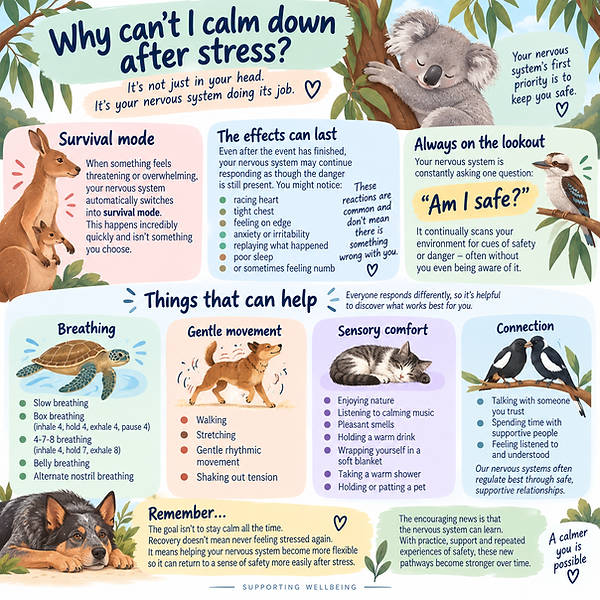
(See the snapshot by clicking here)
When something feels threatening or overwhelming, your nervous system automatically switches into survival mode. This happens incredibly quickly and isn't something you choose. Your brain's first priority is to keep you safe.
Even after the event has finished, your nervous system may continue responding as though the danger is still present. You might notice a racing heart, a tight chest, replaying what happened, feeling on edge, anxiety, irritability, poor sleep, or sometimes even feeling numb. These reactions don't mean there is something wrong with you—they are common ways the nervous system tries to protect us after stress.
Your nervous system is constantly asking one question:
"Am I safe?"
To answer this question, it continually scans your environment for cues such as facial expressions, tone of voice, body language, sounds and other signals of safety or danger—often without you even being aware of it.
After difficult or overwhelming experiences, the nervous system can become extra sensitive and begin detecting danger even when you are actually safe.
You usually can't simply think your way out of a stress response. Instead, we help the body experience cues of safety. As the body begins to settle, the brain gradually receives the message:
"I'm safe now."
Things That Can Help Calm the Nervous System
Everyone responds differently, so it's helpful to discover what works best for you.
Breathing
✔ Slow breathing
✔ Box breathing (inhale for 4 seconds, hold for 4 seconds, exhale for 4 seconds, pause for 4 seconds)
✔ 4-7-8 breathing (inhale through your nose for 4 seconds, hold for 7 seconds, exhale slowly through your mouth for 8 seconds)
✔ Belly breathing (diaphragmatic breathing)
✔ Alternate nostril breathing
Gentle Movement
✔ Walking
✔ Stretching
✔ Gentle rhythmic movement
✔ Shaking out tension
Sensory Comfort
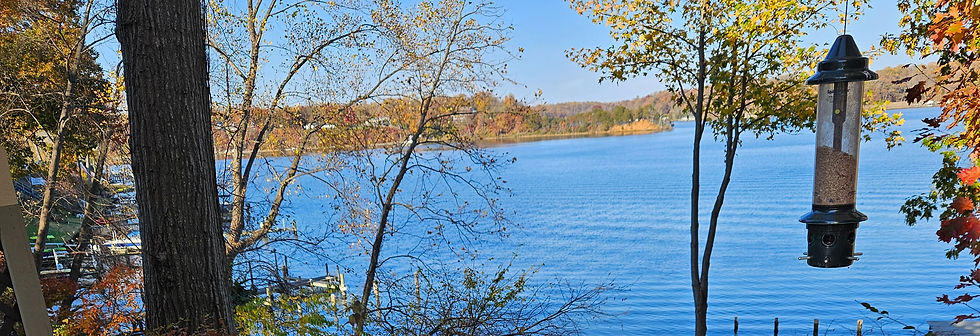
✔ Enjoying nature
✔ Listening to calming music
✔ Pleasant smells
✔ Holding a warm drink
✔ Wrapping yourself in a soft blanket
✔ Taking a warm shower
✔ Holding or patting a pet
Connection
✔ Talking with someone you trust
✔ Spending time with supportive people
✔ Feeling listened to and understood
Our nervous systems often regulate best through safe, supportive relationships.
Remember
The goal isn't to stay calm all the time. Everyone's nervous system naturally moves between different states throughout the day.
Recovery doesn't mean never feeling stressed again. It means helping your nervous system become more flexible so it can return to a sense of safety more easily after stress.
The encouraging news is that the nervous system can learn. Just as it learned to become protective, it can gradually learn to recognise safety again. With practice, support and repeated experiences of safety, these new pathways become stronger over time.
← Back to the Wellbeing Toolbox Next: Why Do I React Before I Think? →